
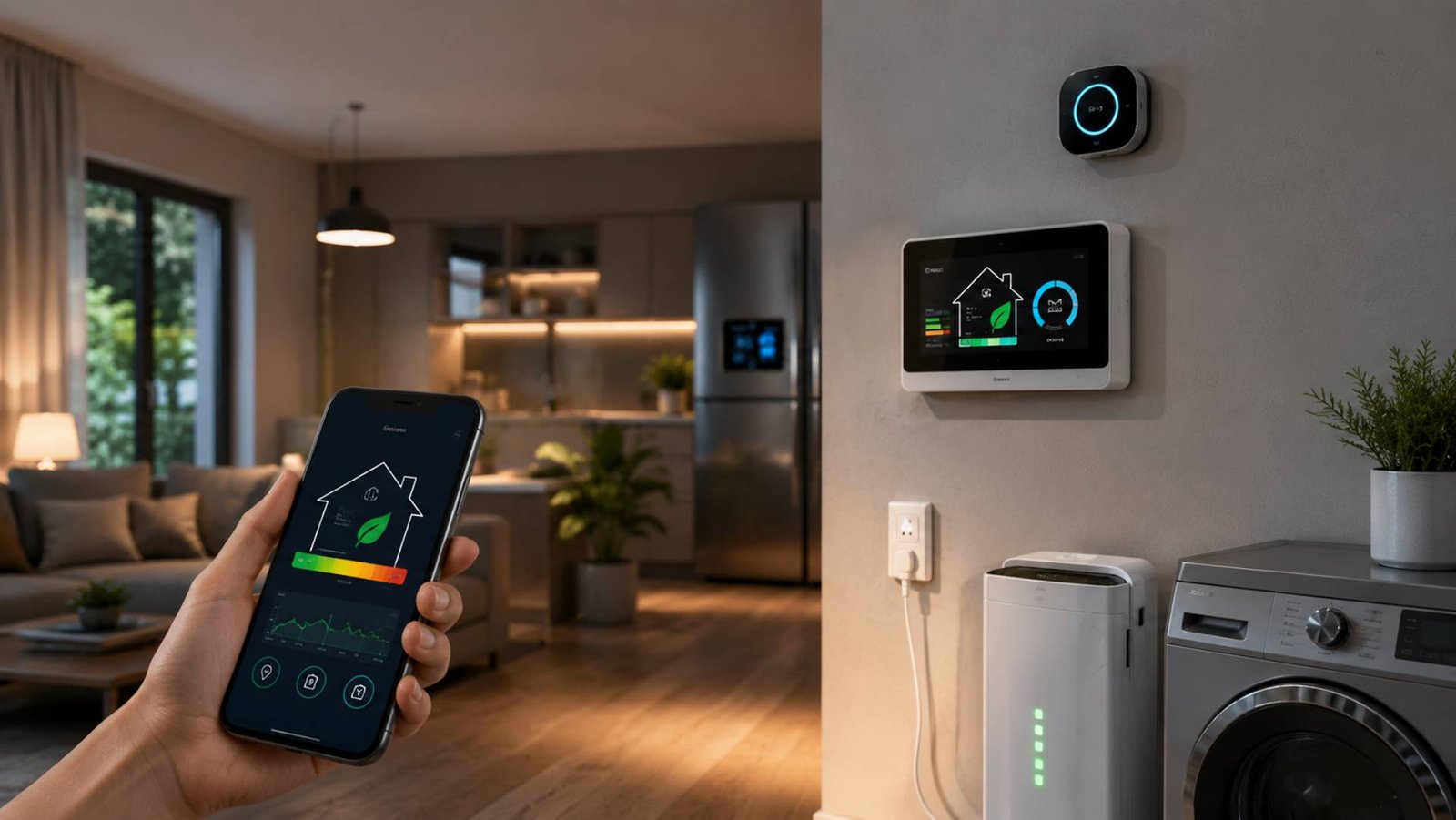
Smart home technology is changing the way households understand and manage energy. Instead of simply turning lights off or adjusting the thermostat manually, connected devices can monitor usage, automate routines and help homeowners make more informed decisions about when and how energy is consumed.
The important point is that smart technology does not automatically reduce energy bills. The results depend on the equipment being controlled, household habits, local climate, electricity rates and how well the system is configured.
A well-planned approach starts with measuring energy use, then identifying waste and using automation where it can make a meaningful difference.
What Is Smart Home Energy Management?
Smart home energy management uses connected devices, sensors, software and automated controls to monitor and manage household energy consumption.
A system might bring together:
- Smart thermostats
- Occupancy and motion sensors
- Connected lighting
- Smart plugs
- Home energy monitors
- Intelligent appliances
- Electric vehicle chargers
- Solar panels and battery storage
- Automated schedules and energy controls
These technologies can work independently or as part of a wider home energy management system.
The goal is not simply to install more smart devices. It is to make energy consumption more visible and, where useful, automatically adjust equipment to match household needs.
Energy Monitoring Is Not the Same as Energy Saving
This distinction is easy to overlook.
An energy monitor can tell you how much electricity your home is using. It may help identify unusual consumption, appliances that run frequently or periods when demand is higher than expected.
But monitoring does not itself save energy.
Savings usually come from what happens after the information is collected. For example, you might discover that heating is running while nobody is home. You could then adjust the schedule or use occupancy-based controls to reduce unnecessary heating.
The process is straightforward:
Measure → Identify → Adjust → Monitor again
This approach is often more useful than buying connected devices without first understanding where energy is being used.
Smart Thermostats and Heating Controls
Heating and cooling can account for a significant share of household energy use, making temperature control an important part of energy management.
Smart thermostats can provide features such as:
- Programmable heating schedules
- Remote temperature control
- Occupancy-based adjustments
- Learning routines
- Temperature monitoring
- App-based controls
- Integration with other smart home devices
For example, a household may create different heating settings for weekdays, evenings and weekends. Some systems can also adjust operation when occupants leave or return.
However, the most advanced features are not always necessary. A straightforward programmable schedule may provide useful control without the cost or complexity of a larger smart-home ecosystem.
Occupancy Sensors Can Reduce Unnecessary Energy Use
A room does not necessarily need the same amount of energy when nobody is using it.
Occupancy sensors can detect whether people are present and allow connected systems to respond. Depending on the equipment, this might mean switching lights off, adjusting heating or changing other settings.
This can be particularly useful in areas such as:
- Spare bedrooms
- Hallways
- Home offices
- Utility rooms
- Garages
- Bathrooms
The benefit comes from matching energy use to actual occupancy rather than relying entirely on fixed schedules.
Connected Lighting
Smart lighting can make it easier to control when and where lights operate.
Schedules, motion sensors and automatic shut-off rules can prevent lights from being left on unnecessarily. Dimming can also reduce lighting output when full brightness is not required, although the actual energy benefit depends on the lighting technology and how it is used.
For many households, smart lighting is most valuable for convenience and automation, with energy savings as a secondary benefit.
Simple changes can often deliver similar results. Turning off unused lights and replacing inefficient bulbs with efficient alternatives may be more important than adding sophisticated controls.
Smart Plugs and Standby Energy
Smart plugs provide another relatively simple way to manage connected equipment.
They can allow users to schedule or remotely switch certain appliances and electronics. This can be useful for devices that do not need to operate continuously.
For example, a smart plug could be used to control selected:
- Entertainment equipment
- Desk accessories
- Lamps
- Small appliances
- Chargers
However, not every device should be switched off at the socket. Some equipment needs continuous power, performs background functions or should remain connected for safety or operational reasons.
The best approach is to identify suitable devices rather than attempting to automate everything.
Home Energy Monitors: Turning Data Into Useful Information
A home energy monitor can provide a clearer picture of electricity consumption than a monthly bill alone.
Depending on the system, homeowners may be able to see:
- Current electricity demand
- Historical consumption
- Daily or weekly patterns
- Changes in usage
- Periods of unusually high demand
This information can help answer practical questions.
When does the home use the most electricity?
Which routines create the highest demand?
Has consumption changed after installing new equipment?
The answers can help homeowners make better decisions about schedules, appliances and energy upgrades.
Intelligent Appliances and Automated Schedules
Modern connected appliances can provide additional control over household energy use.
Depending on the appliance, features may include delayed operation, remote monitoring, scheduling and notifications.
This can become more useful when electricity prices vary by time. A homeowner may choose to run suitable energy-intensive equipment during cheaper periods, where their tariff and appliance allow it.
However, automation should be based on actual household circumstances. Running an appliance at a different time does not necessarily reduce total energy consumption; it may simply move the consumption to another period.
Managing Electric Vehicle Charging
Electric vehicles add a significant new energy load to some homes.
Smart EV chargers can help coordinate charging with household schedules and, where supported, electricity tariffs or renewable generation.
For example, charging can potentially be scheduled for periods when:
- Electricity is cheaper
- Solar generation is available
- Household demand is lower
Some advanced systems can also coordinate EV charging with other home energy equipment.
As EV ownership grows, charging becomes an increasingly important part of household energy management rather than a separate activity.
Solar Panels, Batteries and Connected Controls
Smart energy management becomes particularly interesting when renewable generation and battery storage are added.
Solar panels generate electricity when sunlight is available, while household demand can occur at different times. Without any control strategy, some generated electricity may be used immediately while other energy flows elsewhere depending on the home’s equipment and energy arrangements.
A battery can provide another way to manage this timing by storing energy for later use.
Connected controls can help coordinate:
Solar generation → Household demand → Battery storage → Grid electricity
The exact benefits depend on system size, electricity tariffs, household consumption patterns, battery settings and local conditions.
It is therefore worth analysing actual energy patterns before investing in a larger integrated system.
Demand Management: Using Energy at the Right Time
Energy management is not always about using less electricity. Sometimes it is about using electricity at better times.
Demand management can involve shifting flexible loads away from periods of high demand or expensive electricity.
Potential examples include:
- EV charging
- Water heating
- Washing machines
- Dishwashers
- Battery charging
- Other flexible electrical loads
This distinction matters because reducing consumption and shifting consumption are different strategies.
A smart system can potentially do both, but homeowners should understand which outcome a particular automation is designed to achieve.
Low-Cost Changes vs Larger Investments
You do not need an expensive smart-home system to start managing energy more effectively.
Low-cost options
Begin with simple measures such as:
- Creating sensible heating schedules.
- Turning off unnecessary lighting and equipment.
- Using efficient lighting.
- Checking energy consumption regularly.
- Scheduling suitable appliances.
- Using smart plugs for appropriate devices.
- Adjusting thermostat settings when rooms are unoccupied.
These changes can provide useful improvements without major installation costs.
Larger investments
More substantial projects could include:
- Smart heating systems
- Whole-home energy monitoring
- Solar photovoltaic systems
- Battery storage
- Smart EV charging
- Integrated home energy management platforms
- Advanced heating and cooling controls
These investments can offer greater control, but they also involve higher upfront costs and more complicated installation.
The right choice depends on the home’s existing equipment, energy consumption, budget and long-term plans.
How to Build a Smarter Energy Strategy
A practical approach is to start small rather than connecting every appliance at once.
1. Measure current consumption
Understand how much energy the home uses and when demand is highest.
2. Find the biggest opportunities
Look for heating, cooling, hot water, appliances or other loads that account for significant consumption.
3. Change behaviour first
Simple scheduling and usage changes can reveal whether automation is likely to help.
4. Add targeted controls
Use smart thermostats, sensors, plugs or appliance controls where they solve a specific problem.
5. Connect larger energy systems
If the economics make sense, consider solar, battery storage or smart EV charging.
6. Review the results
Continue monitoring consumption after making changes. A smart system should provide useful feedback rather than simply adding another collection of gadgets.
What Are the Limitations of Smart Energy Management?
Connected technology has plenty of potential, but it is not a guarantee of lower energy bills.
Several factors can affect the results.
Equipment efficiency: Smart controls cannot make an inefficient appliance inherently efficient.
Household behaviour: Automation works best when settings reflect real routines.
Climate: Heating and cooling requirements vary significantly by location and season.
Electricity tariffs: Time-based savings depend on the specific pricing structure available.
Installation costs: A system may save energy but take years to recover its initial cost.
Compatibility: Different devices may not communicate effectively with one another.
Connectivity: Internet-dependent features may be affected by network problems or service changes.
These limitations make careful planning important.
Is a Smart Home Worth It for Energy Savings?
For many households, the answer depends less on how many smart devices they own and more on whether those devices address genuine sources of energy waste.
A smart thermostat may be worthwhile if heating schedules are difficult to manage manually. An energy monitor may be valuable if electricity consumption is poorly understood. Smart EV charging may make sense for a household with an electric vehicle and suitable tariff or renewable-energy setup.
On the other hand, buying connected versions of every household device simply because they are labelled “smart” may provide limited financial value.
The strongest strategy is usually problem first, technology second.
Frequently Asked Questions
Does smart home technology reduce electricity bills?
It can, but savings are not guaranteed. Results depend on the devices installed, household behaviour, energy prices, climate and how the technology is configured.
What is the best smart device for saving energy?
There is no universal best device. Smart thermostats, energy monitors, occupancy sensors and smart EV chargers can each be useful in different circumstances.
Can smart plugs save electricity?
They can help reduce unnecessary operation or standby consumption for suitable devices. Their value depends on what they control and how much energy that equipment uses.
Are smart thermostats worth it?
They can be worthwhile when they improve heating schedules, reduce unnecessary operation or make temperature control easier. The potential benefit depends on the existing heating system and household routine.
Can smart home systems work with solar panels?
Yes. Compatible systems can coordinate solar generation with household consumption, battery storage and other flexible loads. The available functionality depends on the equipment and installation.
Conclusion
Smart home energy management is ultimately about making energy use visible, controllable and better matched to everyday life. Connected technology can help households monitor consumption, automate routines and coordinate equipment, but smart devices are not a substitute for good decisions.
The most effective approach is to measure first, identify opportunities and automate selectively. Start with simple changes, add targeted controls where they solve a genuine problem, and consider larger investments such as solar, batteries or smart EV charging when the numbers make sense.
When technology is used thoughtfully, a smart home can become more than a collection of connected gadgets. It can become a practical system for understanding where energy goes and making better decisions about how it is used.