
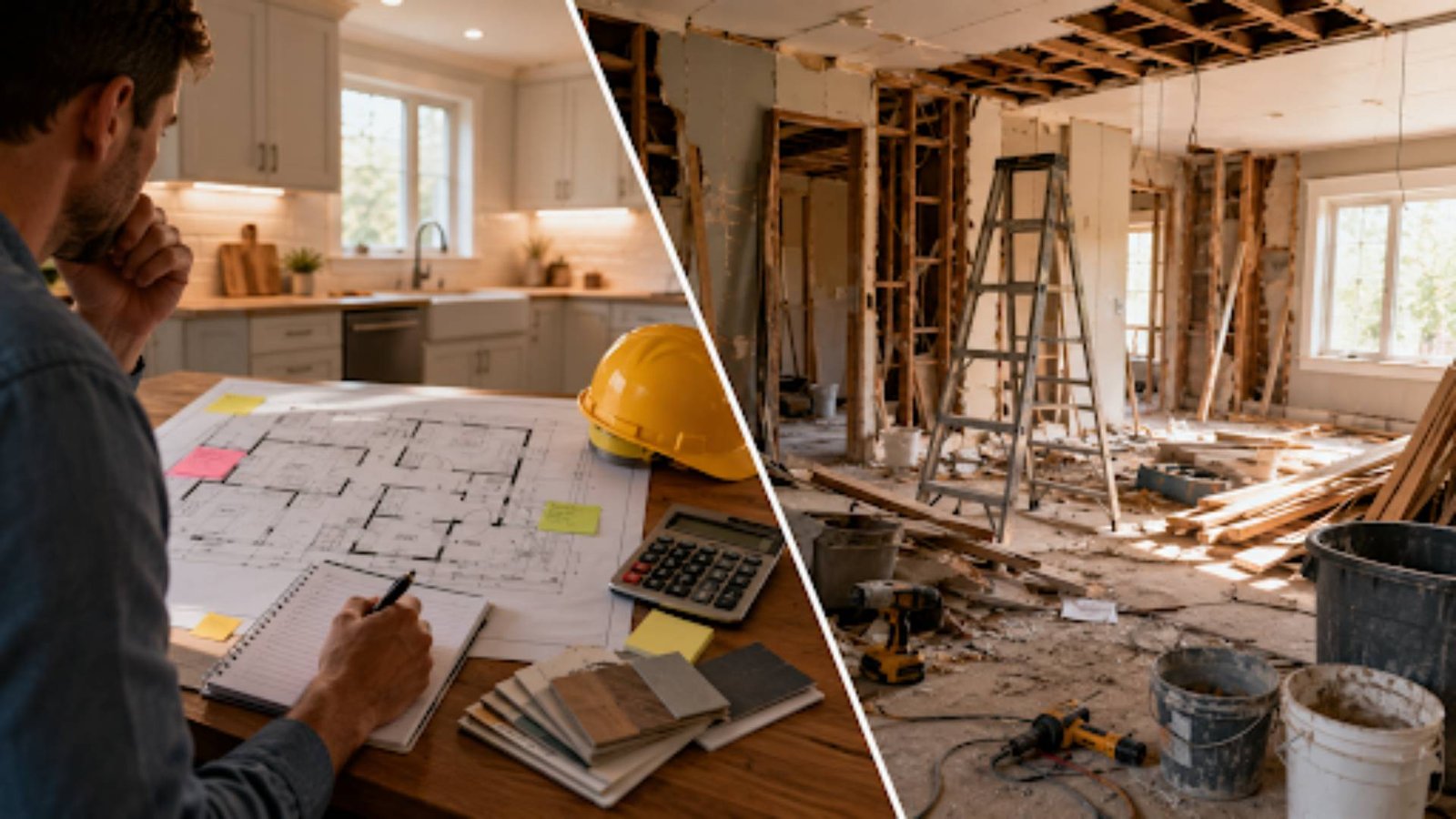
A home renovation can be exciting. You finally get the kitchen you have wanted, create a better bathroom layout, finish an unused room, or improve the way your entire home works.
But renovations can also become expensive, stressful, and frustrating when important decisions are made too late.
Many costly problems do not begin when construction starts. They begin weeks or months earlier with an unclear scope, an unrealistic budget, poor communication, rushed material orders, or failure to investigate the existing property.
The good news is that most renovation mistakes are preventable.
With careful planning, realistic budgeting, clear documentation, and regular quality checks, you can reduce unnecessary delays and avoid many expenses that catch homeowners off guard.
1. Starting Without a Clear Renovation Scope
One of the most common mistakes is beginning work before deciding exactly what the project includes.
“I’ll figure it out as we go” sounds flexible, but it can quickly become expensive.
A renovation scope should identify:
- Which rooms or areas will be changed
- What will be repaired, replaced, or retained
- Whether the layout will change
- Which materials and finishes are expected
- What work will be completed by professionals
- What work, if any, will be completed as DIY
- The desired completion timeframe
- The approximate budget
The scope does not need to predict every detail before work begins. However, the major decisions should be clear enough for contractors to estimate the project properly.
Without a defined scope, it becomes difficult to compare quotes or determine whether a new expense is genuinely necessary.
2. Underestimating the Renovation Budget
A renovation budget should be based on more than the cost of materials and labour.
There may also be expenses for:
- Design or planning services
- Permits and inspections
- Demolition
- Waste removal
- Delivery
- Temporary accommodation
- Site preparation
- Repairs discovered after demolition
- Replacement of damaged materials
- Additional labour
- Final adjustments
Older properties can be particularly unpredictable because hidden conditions may not become visible until walls, ceilings, or floors are opened.
For this reason, avoid spending the entire budget on the planned work.
Build in a Contingency Fund
A contingency fund provides financial breathing room when something unexpected happens.
The appropriate amount depends on the property’s condition and the complexity of the project. A straightforward cosmetic renovation may have fewer unknowns than a major structural remodel.
The important point is to set aside contingency money before construction begins rather than hoping nothing goes wrong.
Keep the contingency separate from money intended for optional upgrades. If you spend the reserve on nicer tiles during the first phase, it will not be available when an actual problem appears.
3. Choosing a Contractor Based Only on Price
The cheapest quote is not automatically the best value.
A very low estimate may reflect a misunderstanding of the scope, missing items, unrealistic labour assumptions, or lower-quality materials.
When comparing contractor proposals, look at:
- Scope of work
- Materials included
- Labour costs
- Project exclusions
- Payment schedule
- Estimated timeline
- Insurance and relevant qualifications
- References or previous work
- Warranty information
- Change-order procedures
Ask each contractor to price substantially the same scope. Otherwise, you may end up comparing completely different projects.
A quote that appears cheaper at first can become more expensive once missing work and additional charges are added.
4. Failing to Investigate the Existing Home
A renovation exposes parts of the property that you may not normally see.
Before major work begins, investigate potential problems with the building.
Depending on the project, this may include checking:
- Structural elements
- Roof condition
- Moisture and drainage
- Plumbing
- Electrical systems
- Insulation
- Windows and doors
- Heating and cooling
- Floors and subfloors
- Previous alterations
If there are warning signs, bring in an appropriate professional before committing to expensive finishes.
It is far better to discover a structural or moisture problem during planning than after installing a new kitchen, bathroom, or floor.
5. Ignoring Moisture Problems
Moisture deserves special attention because it can damage multiple parts of a home.
A stained wall, musty smell, peeling paint, swollen flooring, or recurring condensation should not simply be covered up.
Find the source first.
Possible causes include:
- Plumbing leaks
- Roof leaks
- Poor drainage
- Damaged gutters
- Condensation
- Inadequate ventilation
- Failed waterproofing
- Water entering around windows or doors
Painting over visible damage may make the room look finished, but it does not solve the underlying problem.
If moisture is present, investigate it before installing new finishes.
6. Forgetting About Permits and Approvals
Some renovation work requires permits, inspections, approvals, or compliance with local building requirements.
The exact rules vary by location and by the type of work being completed.
Do not assume that a project is exempt simply because it is inside your home.
Check requirements before starting work involving areas such as:
- Structural changes
- Major electrical work
- Plumbing alterations
- Significant layout changes
- Extensions
- Exterior modifications
- Certain heating or ventilation systems
Where professional input is required, use appropriately qualified people.
Skipping required approvals can create delays, additional costs, and problems when you eventually sell or refinance the property.
7. Ordering Materials Too Late
A renovation schedule can quickly fall apart when a critical material is unavailable.
Cabinets, windows, doors, specialist tiles, appliances, flooring, and custom fixtures can have different lead times.
Do not assume everything can be purchased when the contractor reaches that stage.
Instead, create a procurement schedule.
For each major item, record:
| Item | Decision Needed | Order Date | Expected Arrival | Responsible Person |
| Cabinets | Finish and layout | Before demolition | Project dependent | Homeowner/contractor |
| Flooring | Material and quantity | Before installation stage | Project dependent | Homeowner |
| Appliances | Model and dimensions | Before cabinetry | Project dependent | Homeowner |
| Doors | Size and style | Early in project | Project dependent | Contractor |
| Lighting | Fixture selection | Before electrical finishing | Project dependent | Homeowner |
The exact timing will vary, but the principle is simple: order important materials early enough to protect the construction schedule.
8. Making Too Many Design Changes During Construction
Changing your mind is easy when you see the project taking shape.
However, even a small change can affect other parts of the renovation.
Moving a kitchen sink, for example, may affect plumbing, cabinets, countertops, electrical work, and flooring.
Before approving a change, ask:
- What will it cost?
- Will it change the schedule?
- What other work will be affected?
- Are new materials required?
- Does the benefit justify the disruption?
Not every change is a bad decision. Sometimes construction reveals a problem that genuinely needs correcting.
The mistake is making changes casually without understanding their wider consequences.
9. Spending Too Much on Low-Priority Finishes
It is easy to become focused on attractive details.
Premium tiles, designer fixtures, expensive handles, decorative lighting, and luxury finishes can consume a surprising portion of the budget.
Meanwhile, more important improvements may receive less attention.
Prioritise spending according to:
- Safety
- Structural integrity
- Moisture protection
- Essential building systems
- Functionality
- Durability
- Comfort
- Appearance
There is nothing wrong with spending more on finishes you genuinely value. The problem comes when cosmetic upgrades take money away from essential work.
10. Getting the Renovation Sequence Wrong
Renovation work usually follows a logical order.
A broad sequence might look like:
- Planning and design
- Inspections and approvals
- Demolition
- Structural repairs
- Roofing or exterior work where needed
- Plumbing and electrical rough-ins
- Heating, cooling, and ventilation work
- Insulation
- Wall and ceiling repairs
- Cabinetry and major built-ins
- Flooring
- Painting
- Fixtures and final finishes
- Testing and inspection
- Final cleaning and handover
The exact order varies by project.
The important thing is to complete hidden work before covering it with finished surfaces.
For example, installing expensive flooring before completing messy wall or plumbing work can create avoidable damage.
11. Not Documenting Decisions
Renovations involve hundreds of decisions.
If they are only discussed verbally, misunderstandings become more likely.
Keep written records of:
- Approved drawings
- Material selections
- Product specifications
- Colour choices
- Measurements
- Contractor proposals
- Change orders
- Payment records
- Important conversations
- Inspection results
- Photos of work before walls are closed
Photographing concealed plumbing, electrical wiring, insulation, and structural work before it is covered can also create a useful record for future maintenance.
Good documentation helps everyone stay on the same page.
12. Failing to Communicate With the Contractor
A contractor cannot work effectively from assumptions.
Establish how communication will happen before construction starts.
You might agree to:
- A weekly site meeting
- Regular progress updates
- Written change approvals
- A single person responsible for design decisions
- A clear process for urgent problems
- Regular budget updates
If several people are making decisions, confusion can develop quickly.
It is usually better to have one clearly identified decision-maker who can respond promptly when choices are needed.
13. Not Checking Work During Construction
Do not wait until the final day to inspect the renovation.
Regular checkpoints can catch problems while they are still relatively easy to fix.
Depending on the project, useful inspection points may include:
- After demolition
- Before walls are closed
- After rough plumbing
- After electrical rough-in
- Before cabinets are installed
- Before flooring is completed
- Before final painting
- During final fixture installation
You do not need to supervise every minute of construction.
Instead, focus on important stages where mistakes become difficult or expensive to correct later.
14. Treating Every Project as DIY
DIY can save money when the work is suitable for your skills and experience.
Painting, some decorating projects, simple hardware changes, and certain basic repairs may be reasonable for capable homeowners.
But some work carries significant safety or compliance risks.
Professional input is particularly important for projects involving:
- Structural changes
- Major electrical work
- Gas systems
- Significant plumbing
- Roofing
- Foundation problems
- Hazardous materials
- Major moisture damage
- Complex waterproofing
- Building-code requirements
Knowing when to hire a professional is part of good renovation planning, not a failure to DIY.
15. Buying Materials Before Final Measurements
Buying too early can create another problem.
A homeowner may purchase flooring, cabinets, appliances, doors, or fixtures based on preliminary measurements only to discover that the final dimensions are different.
Confirm measurements before placing expensive orders.
This is especially important for:
- Built-in appliances
- Cabinets
- Countertops
- Doors
- Windows
- Shower enclosures
- Flooring quantities
- Custom furniture
Where a professional is responsible for installation, confirm who is responsible for final measurements.
16. Forgetting About Waste and Cleanup
Demolition creates more waste than many homeowners expect.
You may need to account for:
- Skip or dumpster hire
- Waste collection
- Recycling
- Hazardous material disposal
- Packaging
- Protection for finished areas
- Final cleaning
Keeping the site organised can also improve safety and efficiency.
A cluttered work area creates additional trip hazards and makes it harder for contractors to work efficiently.
17. Choosing Materials Without Considering Maintenance
A beautiful material is not automatically a practical material.
Before selecting a finish, ask:
- How often will it need cleaning?
- Is it vulnerable to scratches?
- Does it tolerate moisture?
- Can damaged sections be repaired?
- Is replacement material likely to remain available?
- Does it require specialist maintenance?
- How will it look after several years of normal use?
A family kitchen, rental property, busy hallway, and rarely used formal room may require very different materials.
Think about how the space will actually be used, not just how it looks in a showroom.
18. Ignoring the Small Details That Affect the Finished Result
Some problems are not expensive individually but can make a renovation look unfinished.
Examples include:
- Misaligned cabinet handles
- Uneven grout lines
- Poorly positioned light switches
- Incorrect door swings
- Inconsistent trim
- Awkward transitions between flooring
- Poorly sealed wet areas
- Gaps around fixtures
- Missing access panels
- Poor paint preparation
Create a final quality checklist rather than relying on a general statement that the project “looks good.”
Walk through each room carefully.
Test doors, windows, drawers, switches, taps, appliances, lights, ventilation, and other fixtures.
19. Paying Too Much Up Front
Payment arrangements should be clear before work begins.
Avoid making large payments without understanding what they cover and when they are due.
A written agreement should clearly identify:
- Total or estimated project cost
- Payment stages
- Deposit requirements
- Materials
- Labour
- Change orders
- Completion requirements
- Warranty terms
- Responsibilities for delays
The exact legal requirements and appropriate payment structure vary by location and project.
If you are unsure about a contract, consider getting appropriate professional advice before signing.
20. Failing to Plan for the Final Inspection
Finishing construction does not necessarily mean the renovation is complete.
Before making final payment or closing the project, conduct a thorough walkthrough.
Check:
- Doors and windows
- Cabinet alignment
- Flooring
- Paintwork
- Tile and grout
- Plumbing fixtures
- Electrical outlets
- Lighting
- Appliances
- Heating and cooling
- Ventilation
- Drainage
- Trim and finishes
Create a written punch list of incomplete or defective items.
This gives everyone a clear record of what still needs attention.
Warning Signs That a Renovation Needs Professional Help
Some situations should not be handled through trial and error.
Seek appropriate professional assistance when you encounter:
- Significant structural movement
- Large or worsening cracks
- Persistent unexplained moisture
- Suspected hazardous materials
- Unsafe electrical conditions
- Major plumbing failures
- Foundation concerns
- Roof damage affecting the building
- Problems involving gas systems
- Complex waterproofing
- Unexpected conditions that significantly change the scope
A professional assessment can prevent a small problem from becoming a much larger one.
A Simple Renovation Planning Checklist
Before construction begins, ask yourself:
Planning
- Is the renovation scope clearly defined?
- Are the priorities established?
- Have measurements been confirmed?
- Are drawings or plans needed?
- Have relevant permissions been checked?
Budget
- Is the estimate realistic?
- Is there a contingency fund?
- Are delivery and disposal costs included?
- Have temporary living costs been considered if necessary?
Contractor
- Have multiple proposals been compared?
- Is the scope clearly documented?
- Are payment terms understood?
- Are responsibilities clear?
Materials
- Have important selections been made?
- Are lead times known?
- Have final measurements been confirmed?
- Are alternatives available if an item becomes unavailable?
Construction
- Is the sequence logical?
- Are important stages being checked?
- Are changes documented?
- Are photos being taken before concealed work is covered?
Completion
- Has a final inspection been scheduled?
- Is there a punch list?
- Have manuals and warranties been collected?
- Has all outstanding work been completed?
Frequently Asked Questions
What is the most common renovation mistake?
Poor planning is one of the biggest sources of renovation problems. An unclear scope, unrealistic budget, weak communication, and failure to investigate the existing property can create problems throughout construction.
How much should I budget for unexpected renovation costs?
There is no single contingency amount that works for every project. The appropriate reserve depends on the property’s condition, age, renovation complexity, and how much hidden work is involved. The important thing is to reserve money specifically for unexpected problems.
Should I choose the cheapest renovation contractor?
Not necessarily. Compare contractors based on scope, experience, communication, materials, schedule, references, insurance, and overall value rather than price alone.
Can changing the design during construction increase costs?
Yes. Design changes can require additional labour, materials, demolition, and schedule adjustments. Even apparently small changes can affect several connected parts of a renovation.
When should renovation materials be ordered?
Important materials should be ordered early enough to match their expected lead times and the construction schedule. Custom cabinets, windows, doors, appliances, specialist finishes, and other long-lead items deserve particular attention.
Conclusion
Successful renovation is not just about choosing attractive materials or finding a contractor who can complete the work. It is about making good decisions before, during, and after construction.
Define the scope. Build a realistic budget. Keep contingency money available. Investigate the existing property. Compare contractors on more than price. Order materials early and document important decisions.
Once construction begins, maintain clear communication and check important stages before they become hidden. When something unexpected appears, take the time to understand it instead of rushing into the cheapest solution.
Most importantly, know where your own skills end. DIY can be rewarding and economical, but structural, electrical, plumbing, moisture, and other specialist problems deserve the right expertise.
A well-planned renovation may still encounter surprises. That is normal. The difference is that good planning gives you the information, budget, documentation, and flexibility needed to handle those surprises without letting them derail the entire project.