Your furnace is one of the hardest-working systems in your home, especially during the colder months. While most homeowners expect it to keep running year after year, many don’t realize that proper maintenance plays a major role in how long a furnace will actually last. Regular care not only helps prevent unexpected breakdowns but also improves efficiency, lowers energy costs, and keeps your home comfortable throughout the heating season.
If you ever notice unusual noises, uneven heating, or a decline in performance, scheduling professional furnace repair Maysville, KY can help address minor issues before they become major problems. Combined with routine maintenance, timely repairs can significantly extend the lifespan of your heating system.
Understand Your Furnace’s Expected Lifespan
Most modern furnaces last between 15 and 20 years, although this can vary depending on the type of system, how often it’s used, and how well it’s maintained. A furnace that receives regular inspections and maintenance often performs efficiently for many years beyond its expected service life.
On the other hand, neglecting routine care can lead to unnecessary wear on critical components, forcing the system to work harder than necessary. Over time, this additional strain shortens its lifespan and increases the likelihood of expensive repairs.
Fortunately, many maintenance tasks are simple and can make a noticeable difference in your furnace’s long-term performance.
Replace Air Filters Regularly
One of the easiest and most effective ways to care for your furnace is by replacing the air filter on schedule.
A clogged filter restricts airflow, making your furnace work harder to circulate warm air throughout your home. This increased workload puts additional stress on the blower motor and other internal components, reducing efficiency and increasing wear.
Most disposable filters should be replaced every one to three months, although households with pets, allergies, or higher dust levels may need more frequent replacements. Checking the filter monthly during the heating season helps ensure proper airflow and consistent performance.
Keep Air Vents and Registers Clear
Blocked vents can create uneven heating and unnecessary pressure within your HVAC system.
Furniture, rugs, curtains, or storage boxes placed over vents reduce airflow, forcing the furnace to operate longer to maintain your desired temperature. Walk through your home periodically to ensure supply and return vents remain open and unobstructed.
Keeping vents clean by vacuuming away dust and debris also improves indoor air quality while allowing your heating system to operate more efficiently.
Schedule Annual Professional Maintenance
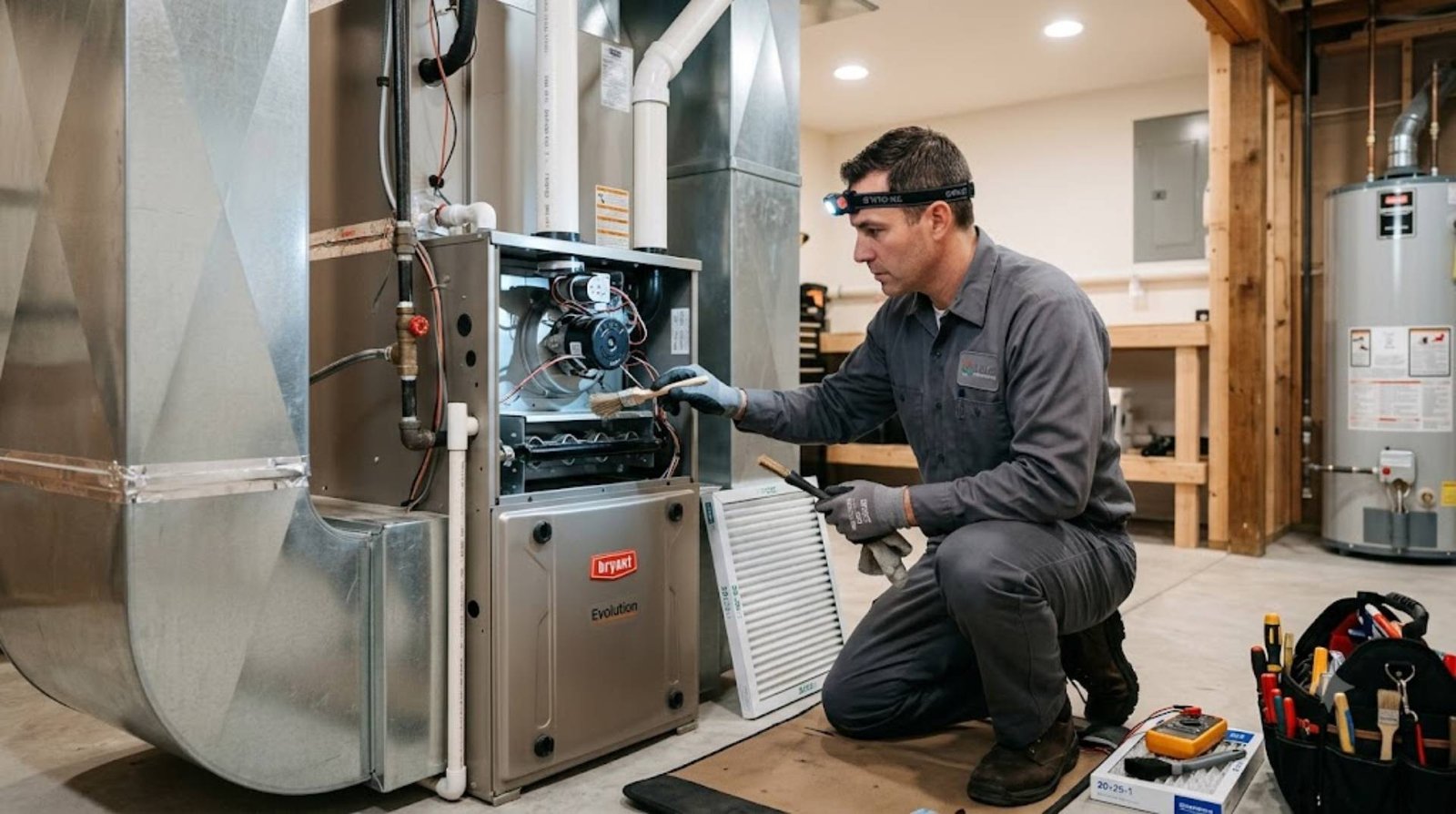
While homeowners can handle basic maintenance tasks, an annual inspection by a qualified HVAC technician remains one of the most valuable investments in your furnace.
During a professional tune-up, technicians typically:
- Inspect burners and heat exchangers
- Check electrical connections
- Test safety controls
- Lubricate moving parts
- Clean internal components
- Measure airflow and system performance
- Verify thermostat operation
These inspections help identify worn parts before they fail, reducing the chances of unexpected breakdowns during peak heating season.
Preventive maintenance often costs far less than emergency repairs and helps your furnace operate at maximum efficiency.
Pay Attention to Unusual Sounds
Your furnace should operate relatively quietly. While some normal expansion and airflow noises are expected, new or persistent sounds often indicate developing problems.
Common warning signs include:
- Banging
- Squealing
- Grinding
- Rattling
- Buzzing
Ignoring these noises allows minor issues to worsen over time. Loose components, worn bearings, or failing motors can quickly develop into much larger repairs if left unchecked.
Addressing unusual sounds early can prevent additional damage and help preserve your furnace’s lifespan.
Use Your Thermostat Wisely
Constantly adjusting your thermostat places unnecessary demand on your heating system.
Instead, choose a comfortable temperature and avoid frequent manual changes throughout the day. Installing a programmable or smart thermostat allows your furnace to operate more efficiently by automatically lowering temperatures when you’re asleep or away from home.
Reducing unnecessary heating cycles minimizes wear on system components while helping lower monthly utility bills.
Keep the Area Around the Furnace Clean
Your furnace needs adequate airflow to operate safely and efficiently.
Avoid storing boxes, paint cans, cleaning products, or other household items directly around the unit. Clutter can restrict airflow, create safety hazards, and make routine maintenance more difficult.
Dust accumulation around the furnace should also be cleaned regularly to prevent debris from entering the system.
Maintaining a clean, accessible area allows technicians to perform inspections more effectively and helps your furnace operate under optimal conditions.
Watch for Changes in Performance
Small performance changes often provide early warning signs that maintenance or repairs are needed.
Pay attention if you notice:
- Longer heating cycles
- Cold spots throughout the house
- Rising utility bills
- Weak airflow
- Frequent cycling on and off
These symptoms don’t always indicate major failures, but they do suggest that your furnace is working harder than it should.
Prompt evaluation can correct minor issues before they reduce efficiency or damage other components.
Seal Air Leaks Throughout Your Home
Your furnace isn’t the only factor affecting heating performance.
Air leaks around windows, doors, attics, and crawl spaces allow warm air to escape, forcing your heating system to run longer to maintain indoor temperatures.
Simple improvements such as weatherstripping, caulking, and adding insulation reduce heat loss and lessen the workload placed on your furnace. The less your furnace has to work, the longer its components are likely to last.
Don’t Ignore Small Repairs
Many homeowners postpone repairs because their furnace still appears to be functioning.
Unfortunately, even minor issues can create additional stress on other parts of the system. A worn belt, faulty sensor, or struggling blower motor may eventually lead to much more extensive damage if left unresolved.
Addressing small problems early often reduces repair costs while extending the overall life of the furnace.Professional technicians can quickly diagnose developing issues and recommend the most cost-effective solutions before failures occur.
Know When Replacement Makes More Sense
Even with excellent maintenance, every furnace eventually reaches the end of its useful life.
If your system is over 15 years old, requires frequent repairs, or struggles to heat your home efficiently, replacement may become the better long-term investment.
Modern furnaces offer significantly improved energy efficiency, quieter operation, and better temperature control compared to older models. While replacing a furnace represents a larger upfront expense, reduced repair costs and lower utility bills often provide meaningful long-term savings.
Final Thoughts
A furnace represents a significant investment in your home’s comfort, and proper care helps protect that investment for years to come. Simple habits such as replacing air filters, keeping vents clear, scheduling annual maintenance, and responding quickly to minor issues can greatly extend your furnace’s lifespan while improving energy efficiency and reliability.
With consistent maintenance and prompt attention to developing problems, your furnace can continue delivering dependable, efficient heating season after season, helping you avoid unnecessary repairs and maximize the value of your heating system.